Citizens of the EU, UK, US, Canada, Australia and most of Latin America enter Morocco visa-free for 90 days. To stay longer, you need a carte de séjour (residency card) issued by the Bureau des Étrangers.
Step 1 — Enter as a tourist
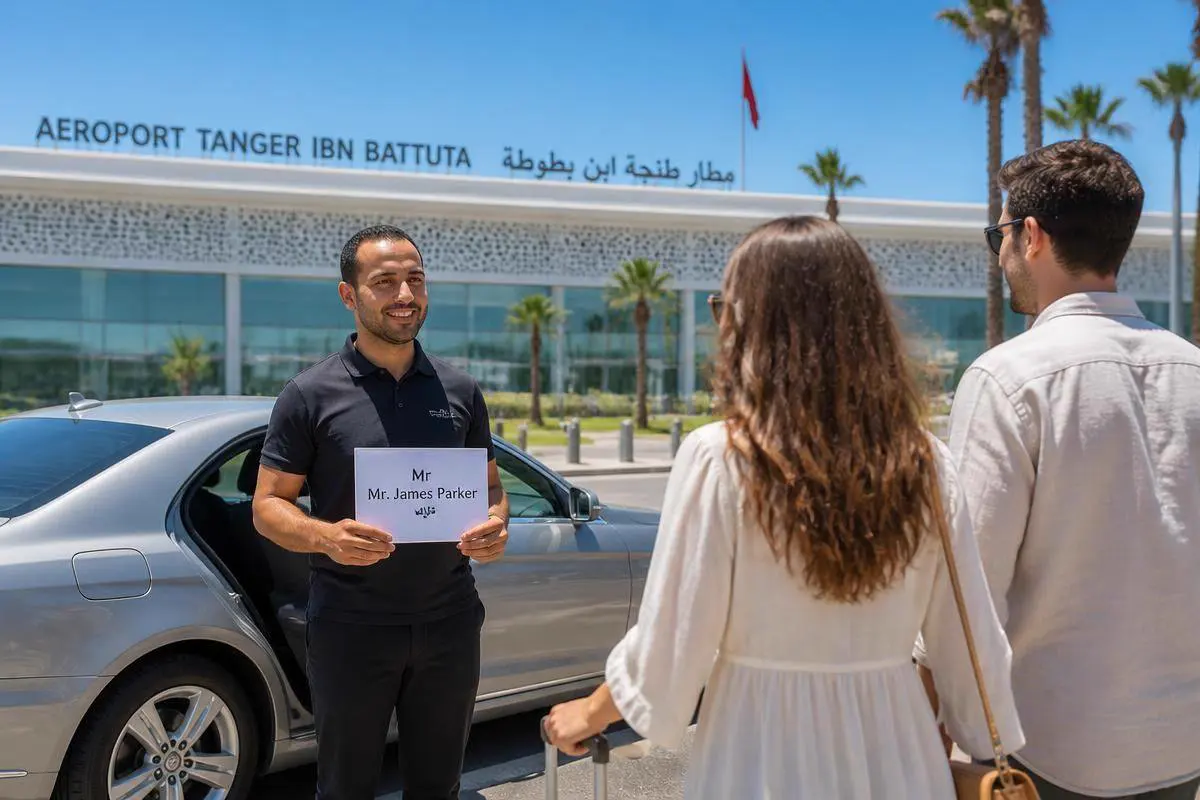
Get the entry stamp at the airport or Tanger Med. Keep the boarding pass and immigration form copy — you'll show them at the prefecture. The 90-day clock starts on the stamp date.
Step 2 — Establish an address
Sign a rental contract (bail) in your name, registered at the local tax office. Or buy property. Or get an attestation d'hébergement from a Moroccan host (notarised at the moqataa).
Step 3 — File at the Bureau des Étrangers
In Tangier: the Préfecture de Police on Avenue Mohammed V near Place de France. Bring your full file (see below). You'll get a récépissé — a paper receipt that acts as temporary proof of residency for 3–6 months while the card is processed.
File contents (all categories):
- Passport + copy
- 8 passport photos (35×45 mm, white background)
- Apostilled criminal record from home country, translated
- Medical certificate from a Moroccan doctor (~300 MAD)
- Proof of address (bail, deed or attestation d'hébergement)
- Proof of resources (see by category)
- 4 forms (filled in French, available at the prefecture)
- 100 MAD timbre fiscal (tax stamp)
Categories of residency
- Retraité (retiree) — pension proof of ~6,000 MAD/month equivalent. The most common route for over-60s.
- Conjoint(e) de Marocain(e) / regroupement familial — marriage certificate + family book. Direct path to long-term residency and (after 5 years) naturalisation. Full document list: residency through marriage.
- Salarié — work contract approved by ANAPEC + work permit from Ministry of Labour. Sponsor employer handles most of the file.
- Auto-entrepreneur / créateur d'entreprise — registered business (RC, ICE, statuts), business plan, bank deposit. Popular for digital nomads going legit.
- Investisseur — proof of significant investment (typically 1M+ MAD into a Moroccan business).
- Étudiant — enrolment certificate from a Moroccan university.
- Visiteur (long-stay non-active) — proof of substantial savings, no professional activity.
Card duration & renewals
First card: usually 1 year. Second renewal: 3 years. Then 5 years. After 10+ years of continuous residency you can apply for the 10-year card or naturalisation.
Renew at least 2 months before expiry. Same documents required, plus proof of continued resources and a fresh medical certificate.
Long-stay visa (visa D)
Required for nationals not visa-exempt (most African and Asian countries). Apply at the Moroccan consulate before travel. Categories mirror the carte de séjour categories. Once in Morocco, you still file for the carte de séjour within 90 days.
The 'visa run' to Spain
Some expats live in Morocco on rolling 90-day tourist stamps by ferrying to Tarifa or Algeciras every 3 months. Officially tolerated but not legal long-term — and it locks you out of property, banking and healthcare benefits. Get the carte de séjour as soon as you can.
FAQ
- How long does the carte de séjour take?
- From filing to receiving the physical card: typically 3–6 months in Tangier. The récépissé covers you in the meantime.
- Can I work in Morocco on a carte de séjour?
- Only if your category permits it (salarié, auto-entrepreneur, investisseur). A retraité or visiteur card does not authorise paid work.
- What if I overstay the 90-day tourist period?
- You'll pay a fine when leaving (typically 100–500 MAD per month overstayed) and may face a future entry refusal. Avoid it.
- Can I get Moroccan citizenship?
- Yes — by naturalisation after 5+ years (10 years standard, 5 years if married to a Moroccan), with proof of integration and Arabic basics. Dual citizenship is allowed by Morocco but check your home country's rules.